
Many public projects are not built on empty sites. They are constructed within active environments, where daily operations must continue alongside construction.
In these settings, phasing becomes more than a scheduling exercise. It is a strategic approach to maintaining continuity, protecting users, and ensuring that essential services remain uninterrupted.
Balancing Construction with Daily Operations
The most immediate challenge in phased construction is maintaining a safe and functional environment while work is underway.
This often requires clear separation between occupied spaces and construction zones, particularly in environments such as schools, healthcare facilities, and civic buildings where safety and accessibility are critical. At the same time, key facilities such as cafeterias, libraries, or shared spaces may need to be temporarily taken offline and replaced or upgraded.
Balancing these competing needs requires careful planning, sequencing, and coordination from the earliest stages of design.
Planning for What Cannot Stop
In occupied environments, certain functions cannot be paused.
Classes must continue, staff must be able to perform their roles, and core services must remain available. This requires identifying what must remain operational at all times and developing a phasing strategy that supports those priorities.
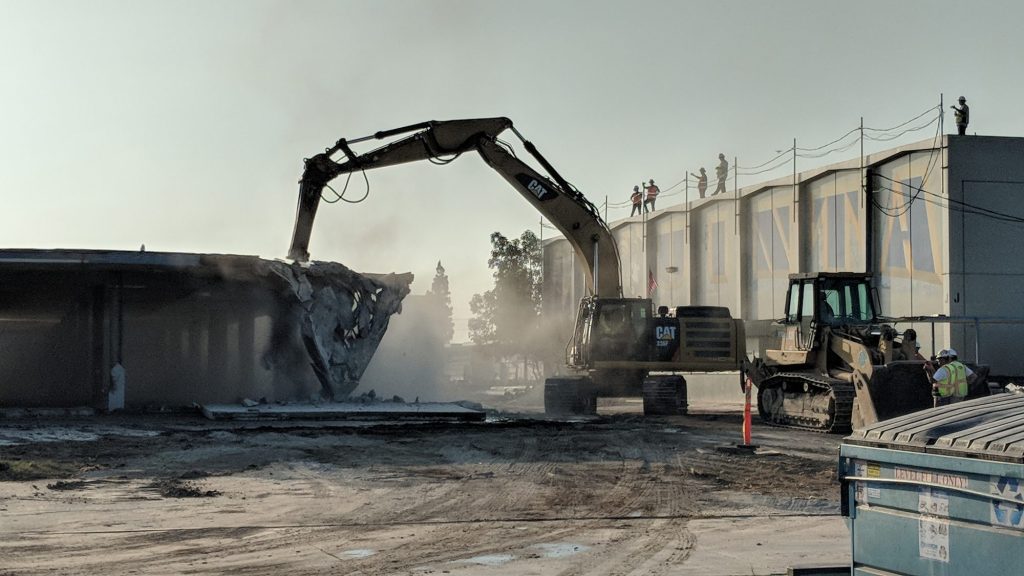
At Garden Grove Unified School District’s La Quinta and Pacifica High Schools, this meant maintaining full campus operations for more than 4,000 students while completing over 200,000 square feet of modernization and new construction across two campuses . Construction was organized into five phases, allowing new facilities to come online as older ones were renovated or replaced, without interrupting daily activities.
Sequencing as a Design Strategy
Effective phasing relies on more than dividing a project into stages. It requires sequencing that considers how spaces are used and how they can transition over time.
On the Garden Grove campuses, this included reconfiguring parking, circulation, and access points in parallel with building construction. Phasing diagrams mapped how areas would shift from active use to construction and back again, ensuring that essential functions such as student drop-off, parking, and campus circulation remained operational throughout the process.
This level of coordination allows projects to move forward while maintaining a sense of continuity for users.
Designing for Flexibility
Phasing is most effective when flexibility is built into the design.
Spaces that can adapt to temporary uses, support relocation, or accommodate shifting program needs make it easier to navigate construction without disruption. This flexibility allows teams to respond to changing conditions, whether that means relocating functions, adjusting circulation, or rethinking how spaces are used during construction.
These principles extend beyond education environments. In civic facilities, such as fire stations, maintaining operational readiness is essential. In healthcare settings, continuity of care is critical. In each case, the ability to adapt spaces and maintain functionality during construction directly impacts the success of the project.
Minimizing Disruption, Maintaining Experience
The goal of phased construction is not only to complete a project, but to preserve the experience of those using the space.
At Garden Grove USD, all phases were completed while maintaining uninterrupted campus operations. Classes continued without relocation, and students and staff retained access to essential services throughout construction.
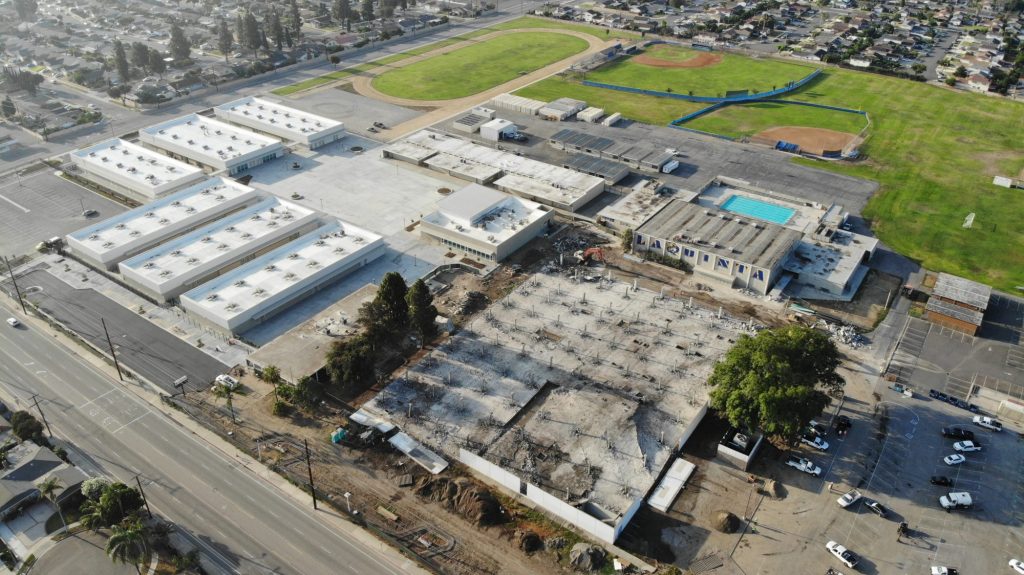
When phasing is carefully planned and executed, the result is a process that feels seamless, even as a significant transformation is taking place.
A Strategic Approach to Phasing
Phased construction requires a clear understanding of how a facility operates, how it will evolve, and how to maintain alignment between design, construction, and user needs.
When approached thoughtfully, phasing becomes a tool that supports continuity rather than disruption. It allows projects to move forward while preserving the functionality and experience of the environment throughout the process.
Planning a project in an active environment? Let’s talk about how to keep operations running. Reach us at info@westgroupdesigns.com.
In 2022, we decided to film a short high light reel of the Women of Westgroup. Westgroup is made up of many diverse women who fill multiple different roles. From accounting to architecture, each woman at Westgroup plays a special role in making this firm function as a whole. Happy International Women's Day!